

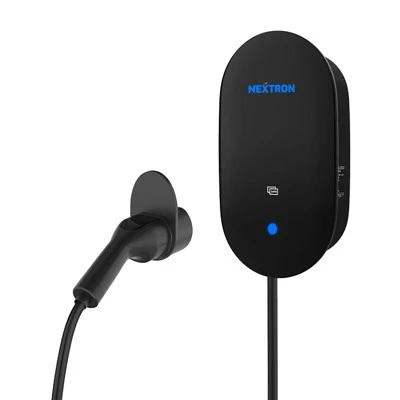
Commercial AC EV charging stations supply alternating-current power to electric vehicles parked for extended periods. They are suitable for commercial parking facilities, hotels, office buildings, residential developments and fleet parking locations where charging demand must be matched to available electrical capacity and parking duration.
For Charge Point Operators (CPOs), electrical distributors, EPC contractors and commercial property developers, model selection depends on rated power, grid configuration, connector standards, backend compatibility, electrical protection and installation requirements.
Product Range and Configuration Options
Power Ratings and Electrical Supply
Available configurations can include 7.4kW, 11kW and 22kW models, subject to the product range. Single-phase and three-phase versions should be selected according to site supply capacity and vehicle compatibility.
Connector and Cable Options
Type 2 (IEC 62196-2) and Type 1 (SAE J1772) options may be available for different markets. Tethered cables and socket-outlet versions should be confirmed for each model.
Mounting Configurations
Wall-mounted units suit suitable structural walls and parking columns. Pedestal-mounted configurations can be specified for open parking areas, subject to installation and foundation requirements.
Network and Access Options
Depending on the model, available options may include Ethernet, Wi-Fi, cellular connectivity, RFID authentication and mobile-app access. Payment-terminal integration requires separate compatibility confirmation.
Technical Specifications
The following table provides a preliminary selection framework. Final ratings, available options and compliance details must be verified against the datasheet for the selected model.
|
Technical Parameter |
Specification / Selection Basis |
|
Rated Output Power |
7.4kW / 11kW / 22kW, model dependent |
|
AC Supply |
230V single-phase or 400V three-phase, subject to model |
|
Rated Current |
Typically 32A single-phase or 16A / 32A three-phase, depending on rating |
|
Grid Frequency |
50Hz / 60Hz, confirm by model |
|
Charging Mode |
Mode 3, subject to IEC 61851-1 conformity |
|
Connector |
Type 2 or Type 1, market and model dependent |
|
Cable / Socket |
Tethered cable or socket outlet; length to be confirmed |
|
User Interface |
Display or status indicators, depending on configuration |
|
Communication |
Ethernet, Wi-Fi or cellular options, where supported |
|
Backend Protocol |
OCPP 1.6J and/or OCPP 2.0.1, subject to model and implementation |
|
Authentication |
RFID and/or app-based access, depending on configuration |
|
Enclosure Protection |
IP and IK ratings to be confirmed from applicable test documentation |
|
Operating Temperature |
Confirm rated operating range and any temperature-related power derating |
|
Electrical Protection |
Protection functions and residual-current detection to be confirmed by model |
|
Compliance Documents |
Applicable declarations, certificates and test reports available subject to model and market |
Operational Features and Integration
OCPP-Based Backend Communication
Where supported, OCPP enables communication between the charging station and a compatible Charging Station Management System (CSMS). Confirm protocol version, supported functions and integration requirements before deployment.
Site Load Management
Dynamic load management may be available to distribute charging power according to measured site demand and configured electrical limits. Confirm whether the selected model requires external metering, a load-management controller or additional communication hardware.
Access and Payment Options
RFID and app-based authentication can support controlled charging access. Direct payment terminals and billing functions depend on the selected hardware, software and payment service integration.
Outdoor Installation
For outdoor projects, assess enclosure protection, impact resistance, ambient temperature, cable routing and mounting conditions against the actual installation environment. Do not assume a particular IP or IK rating without applicable evidence.
Manufacturing and Quality Control
Incoming Component Inspection
Incoming inspection can cover components and materials against approved specifications, supplier documentation and the applicable inspection plan.
End-of-Line Testing
The product test plan may include electrical safety checks, protective earth continuity, insulation resistance, protective-device operation and charging-function verification, as applicable to the model.
Product Traceability
Serial-number tracking and production test records can support batch identification and quality investigations where these processes are implemented. Confirm the traceability scope before specifying it in a project requirement.
Compliance Documentation
Request the applicable technical datasheet, user manual, installation instructions, wiring diagrams, declarations of conformity and relevant test reports for the target market and selected model.
OEM/ODM Customization and Bulk Procurement
Product and Branding Options
Subject to engineering approval, customization may include enclosure color, logo placement, cable length, labeling and packaging. Confirm minimum order quantities and tooling requirements for each option.
Software and Network Configuration
Where supported, project preparation may include language settings, network parameters, backend endpoint configuration and access-control settings. Security, firmware and CSMS compatibility requirements should be agreed before production.
Bulk Order Workflow
1. Technical Review: Confirm destination market, electrical supply, power rating, connector, installation type and backend requirements.
2. Sample Evaluation: Validate product configuration, installation fit and required communication functions before approving the production specification.
3. Production and Inspection: Confirm the approved specification, inspection plan, packaging requirements and pre-shipment documentation.
4. Shipment and After-Sales Support: Agree on lead time, delivery terms, warranty coverage, spare-parts arrangements and technical support in the quotation or supply contract.
FAQ
Q: When should a commercial AC charger be selected instead of a DC fast charger?
A: AC charging is generally suitable for locations where vehicles remain parked for extended periods, such as workplaces, hotels and residential parking. DC charging may be more appropriate where short dwell times and higher charging power are required. The decision depends on vehicle onboard-charger limits, site capacity, utilization and project economics.
Q: How can compatibility with our existing CSMS be confirmed?
A: Provide the CSMS name, required OCPP version, expected features and any security or certification requirements. Confirm the charger's implementation and complete the necessary integration tests before bulk deployment.
Q: Can the charging station be installed outdoors?
A: Outdoor suitability depends on the enclosure rating, operating-temperature limits, installation method and local electrical requirements. Request the applicable test documentation and installation manual for the selected model.
Q: Can the station be customized for private-label projects?
A: Potential options include branding, labeling, packaging and selected hardware or software configurations. Availability, MOQ, engineering feasibility and lead time must be confirmed for each customization request.
Q: What information is required for a bulk quotation?
A: Provide the destination country, quantity, required power rating, single-phase or three-phase supply, connector type, mounting preference, CSMS requirements, customization needs and target delivery date. Include project specifications or tender documents where available.
Request Technical Documentation and a Bulk Quotation
Send your project requirements to obtain a model recommendation and a quotation based on the required configuration.
Please provide
Destination country and applicable market requirements
Estimated quantity and expected order schedule
Available supply voltage, phase and current capacity
Required charging power and connector standard
Wall-mounted or pedestal-mounted installation
CSMS, OCPP and authentication requirements
Required certificates, test reports and technical document
Branding, packaging and other customization requirements
Contact: Insert your verified company sales email, telephone number or WhatsApp contact.
Final product selection, certification applicability, integration scope, pricing and delivery terms are subject to technical review and written confirmation.


